New restaurant equipment is expensive, and the pull toward used is strong, especially for a first location. Commercial equipment is built to last, and a well-maintained piece can run for many more years. A well-chosen used purchase is one of the few places where a first-time operator can genuinely save money.
A badly chosen one is the opposite: a fryer with a cracked tank, a cooler whose compressor fails in July, a range whose parts are no longer made. The difference lies almost entirely in what you inspect before you pay.
A cafe owner buys a bargain reach-in at auction, loads it on Friday and finds on Sunday that it holds temperature only while the door stays shut. The seller never ran it under load and nobody asked. Twenty minutes of testing would have shown it.
Where used equipment comes from, and why it matters
- Used-equipment dealers. They recondition and test what they sell, offer some warranty, and can deliver and help with installation. Prices are higher than other sources, and you are paying for reduced risk.
- Auctions. Often the lowest prices, almost always sold as-is with no testing and no returns. Equipment frequently comes from a closed restaurant, with unknown history and sometimes unknown damage.
- Closing restaurants and private sellers. Possibly good value, and you can sometimes see the equipment running in place. You need to do the inspecting yourself.
- Online marketplaces. A mixed bag. Photographs hide wear, and descriptions are unreliable.
The more risk you take on, the more you should save, and the more thorough your inspection must be.
Check these before you think about price
Will your health authority accept it?
Many local health departments require food-contact equipment to carry a recognised commercial certification, and they review the equipment list when they approve a plan. Equipment designed for home use, or old equipment without the certification mark, may not be accepted. Ask your health department what it requires before you buy anything, not after it arrives.
Does it match your building?
Read the data plate. It states the voltage and phase, the amperage, the gas type, the input rating and the manufacture date. A three-phase machine will not run on single-phase power. A gas machine built for natural gas needs a conversion to run on propane. Verify that your utilities and your fuel match, and that the dimensions and clearances fit the space.
Can you still get parts?
A model that was discontinued years ago, or from a manufacturer that no longer exists, may be impossible to repair when a control board or a valve fails. Look up the model number and check whether parts and service are available.
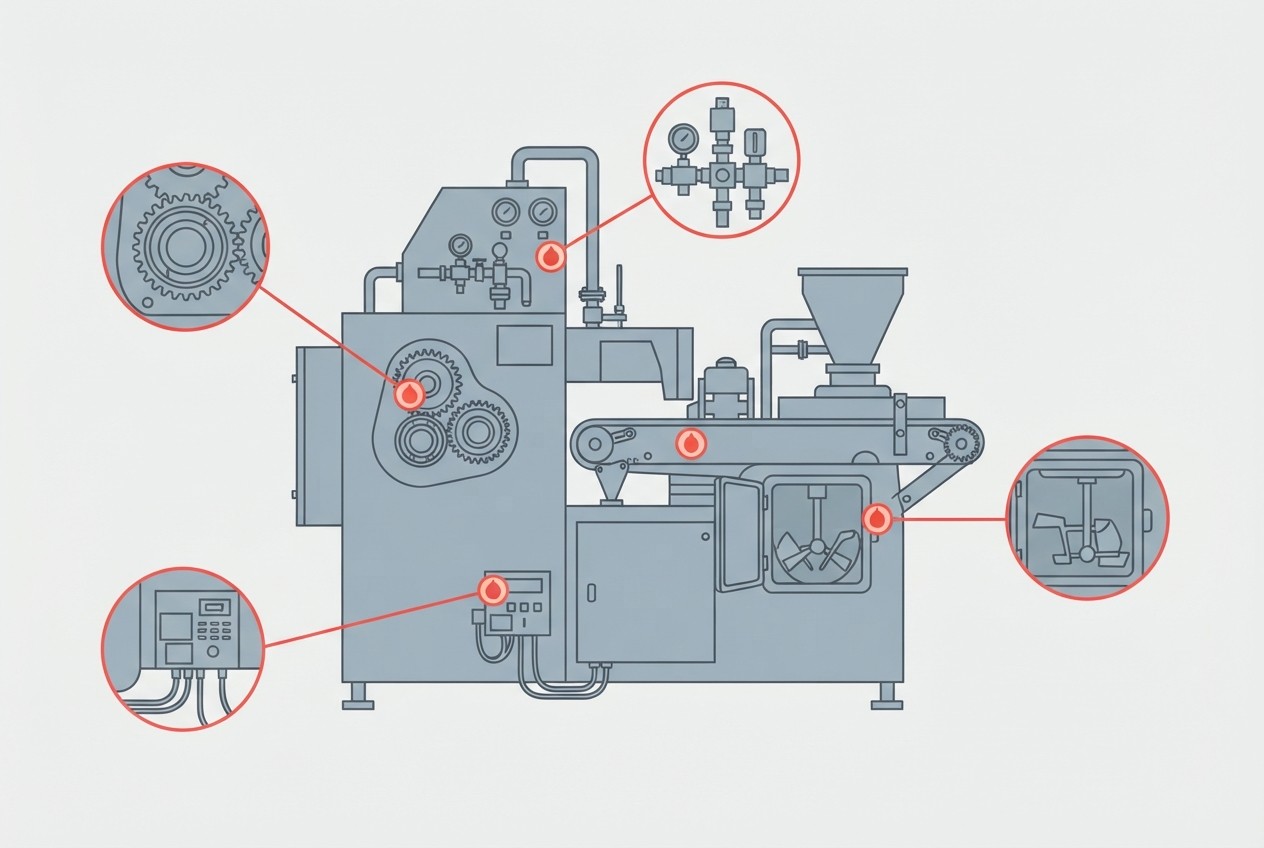
What to check on each machine
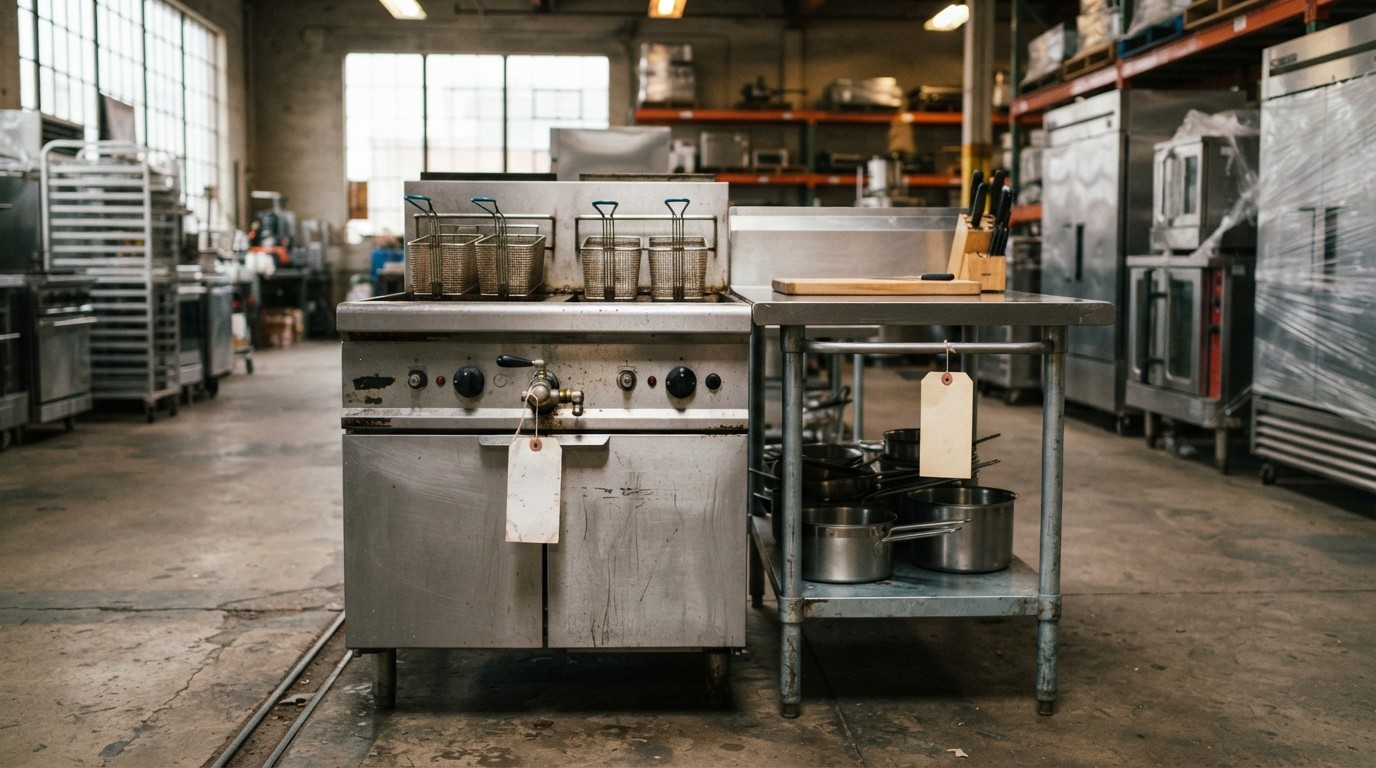
- Fryers. What to check: Tank condition and welds, thermostat accuracy, burners or elements, filtration system, basket and drain valve. Red flags: Cracks or weeping seams, a tank that is pitted inside, a drain valve that will not seal.
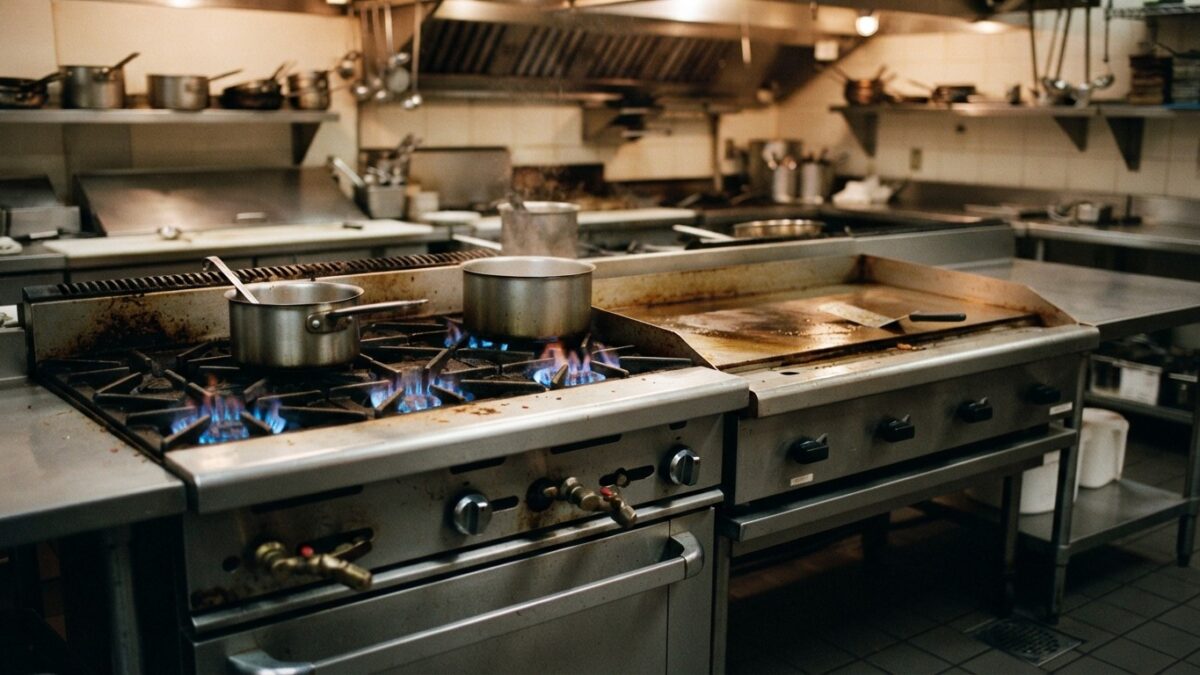
- Ranges and griddles. What to check: Burners light evenly, flat-top is flat, valves turn smoothly, oven doors seal. Red flags: Warped griddle plates, burners that will not light, rust-through in the cabinet.
- Ovens. What to check: Door gaskets and hinges, burner or element function, fan operation, interior condition, temperature accuracy. Red flags: Warped doors, a fan that grinds, large temperature swings.
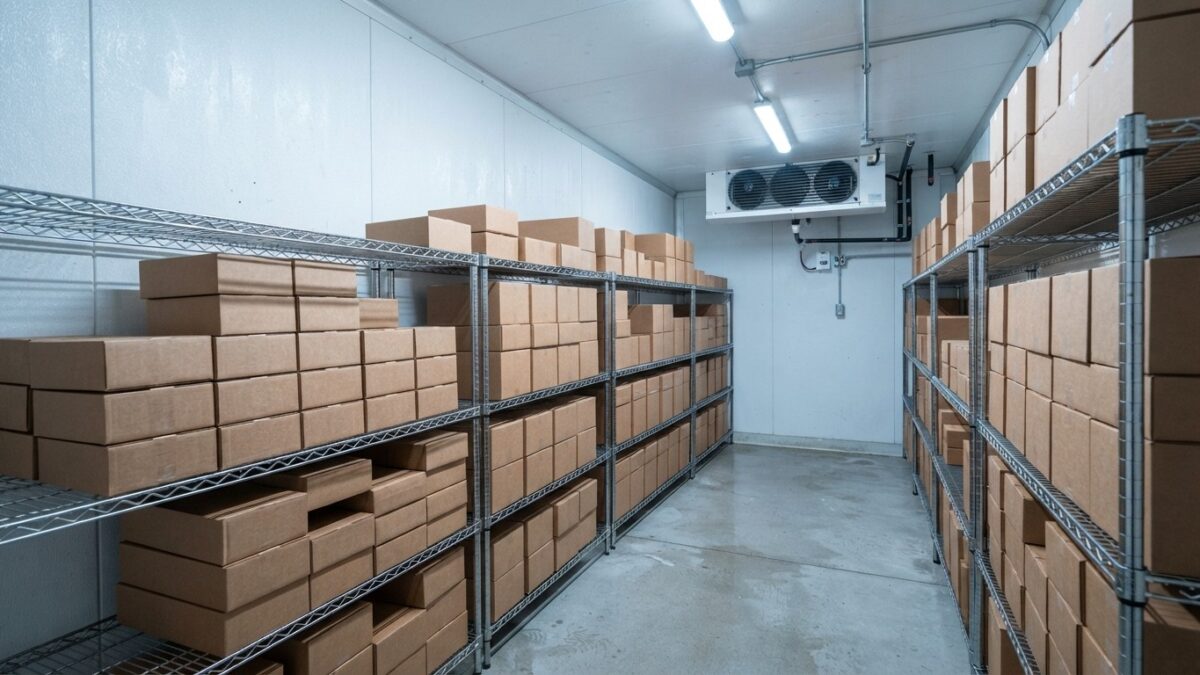
- Refrigeration. What to check: Compressor runs quietly and cycles, reaches temperature and holds it, door seals, evaporator and condenser coil condition. Red flags: Frost where there should be none, icing of coils, oily residue suggesting a leak, a compressor that never stops.
- Ice machines. What to check: Production, cleanliness inside, water lines, condenser. Red flags: Mineral build-up, rust, slow production.
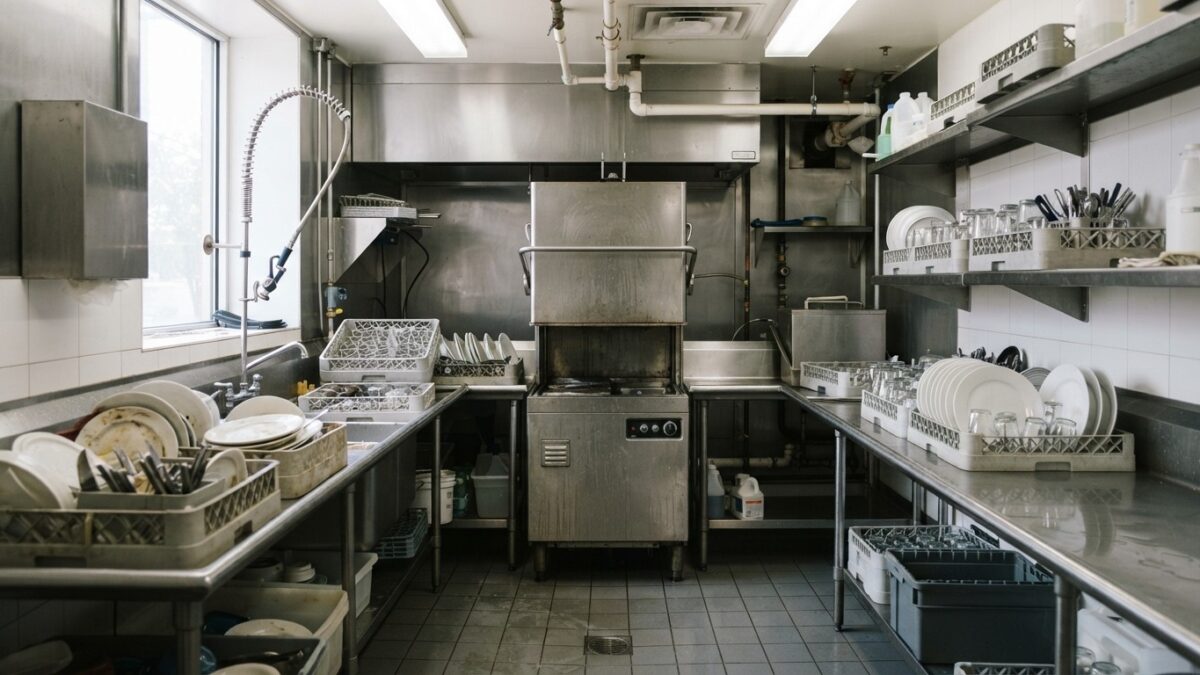
- Prep tables and shelving. What to check: Flatness, welds, legs and feet, drawers and slides. Red flags: Corrosion at seams, bent frames, damaged work surfaces.
- Mixers and slicers. What to check: Gears, bowl and attachment fit, guards and safety interlocks. Red flags: Grinding noise, missing guards, play in the shaft.
See it run, under load
An unplugged machine tells you almost nothing. Ask to see it operate. For heating equipment, that means letting it reach temperature and watching whether it holds. For refrigeration, it means leaving it running long enough to confirm that it can cool and stay cold. A reach-in that is “cold” after ten minutes may be unable to hold temperature after an hour.
Listen. Grinding, rattling, squealing or a motor that strains are worth walking away from, or worth a technician’s opinion. Smell as well: scorched insulation, gas odours or stale grease point to problems or neglect. A gas smell near any appliance is a safety matter, and you should not proceed. Leave the area and let the owner deal with it.
Ask for the history
- How old is it, and where did it come from?
- Why is it being sold?
- Has it been serviced, and are there records?
- What has been repaired or replaced, and when?
- Was it used in a heavy-duty setting, such as a high-volume fryer line, or a lighter one?
- Is there a warranty, even a short one, and who honours it?
- What is the return or inspection policy?
Answers matter less than how the seller gives them. A seller who answers plainly, admits what is worn and offers records is a better risk than one who answers everything with “works great.”
What is usually fine, and what is risky
Used equipment divides into things with little to go wrong and things with a lot.
Generally low-risk used buys: stainless steel prep tables, shelving, sinks, hoods in good condition, rolling racks, simple cooking surfaces and ranges with few electronics, and heavy mechanical equipment such as mixers from reputable brands. There is not much in them to wear out.
Higher-risk used buys: refrigeration, because a failing compressor or a refrigerant leak can be expensive to repair; anything with complex electronic controls, because boards are costly and often unavailable; ice machines, because hygiene and scale matter; and combination ovens and dish machines, where age and water quality take their toll. These can still be good purchases from a reputable dealer who tests them and warrants them.
Count the whole cost
The sticker price is the beginning. Add delivery, the cost of installation by licensed contractors, any gas or electrical conversion, cleaning and reconditioning, replacement of worn parts like gaskets and igniters, and the cost of downtime if it fails. A used machine at half the price of a new one that needs a third of the new price in repairs and a week of lost service is not half the cost.
Compare with new as well. New equipment brings a manufacturer’s warranty, current efficiency and a clean history. For equipment that is central to the menu and hard to replace quickly, such as the main fryer or the walk-in refrigeration, the premium for new is often a reasonable price for certainty.
Before you pay
- Take photographs of the data plate and the equipment, with serial numbers.
- Get the terms in writing, including any warranty and the return policy.
- Confirm who is responsible for removal and transport, and whether the seller will help disconnect gas and electrical connections. Disconnecting and reconnecting utilities belongs to a licensed professional.
- Arrange installation and any required inspections with your contractor before the equipment arrives.
- Test everything again when it is in place, and note any problems promptly, while a dealer’s warranty may still apply.
Used equipment rewards patience and punishes impulse. Go in knowing what your building and your health authority require, inspect the parts that wear first, watch the machine run, and be willing to walk away. The right piece at the right price is out there, and it will still be there tomorrow.
Frequently asked questions
Should I buy used refrigeration?
Only from a seller who tests it and warrants it, because a failing compressor or a leak can cost more than the saving. Look for steady cooling, sound gaskets and clean coils.
Is auction equipment a bad idea?
Not always, but it is sold as-is, so you inherit every unknown. Inspect it in person and budget for reconditioning.
What if my health department rejects it?
Ask before you buy. Many departments expect recognised commercial certification for food-contact equipment and review the equipment list during plan review.